Visitor guides · Zadar
How does the Zadar Sea Organ make music?
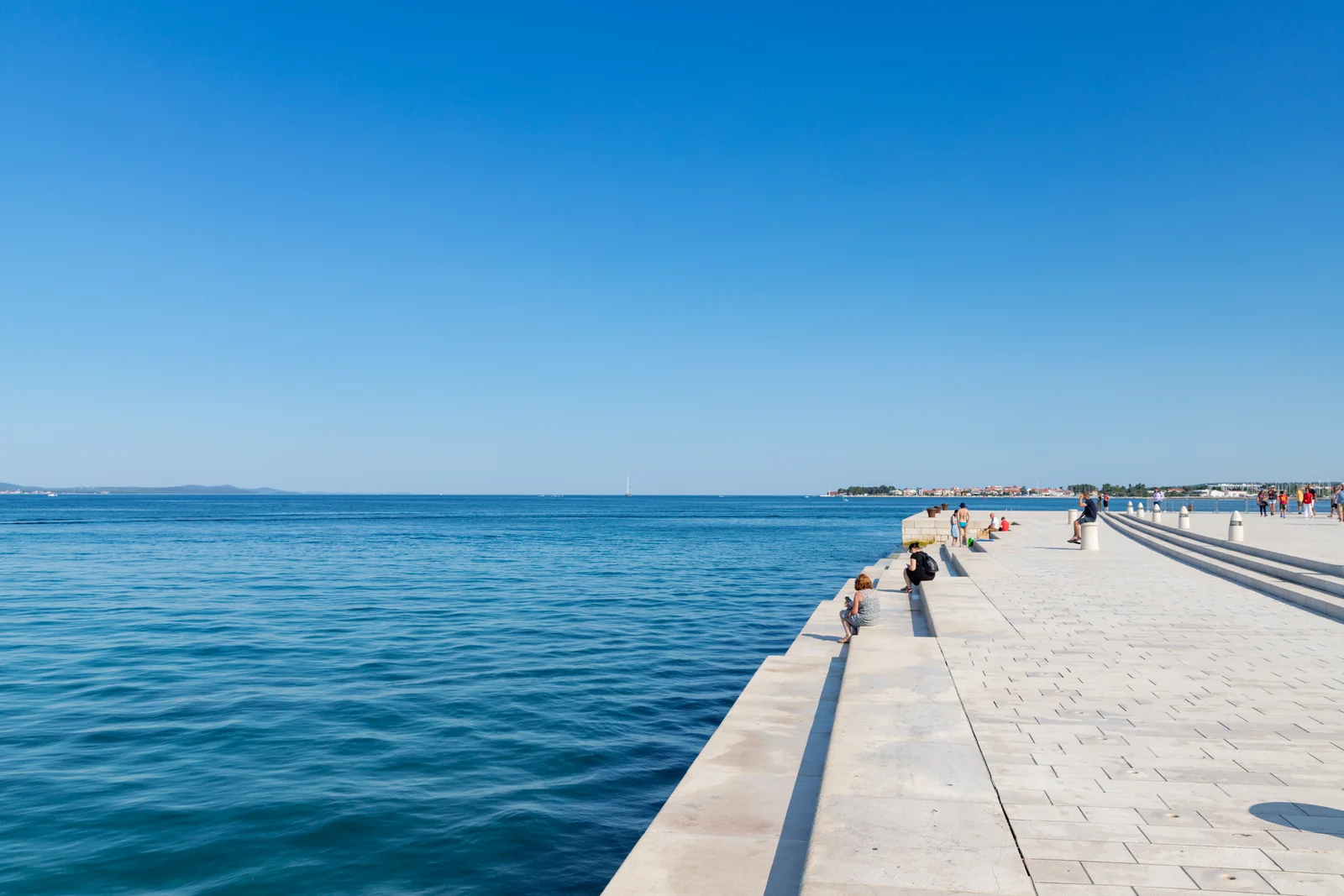
The Sea Organ turns the movement of seawater into sound. Waves move air through a system beneath the waterfront steps, producing tones through 35 pipes. Architect Nikola Bašić’s installation opened in 2005. The sequence changes with the water, so there is no fixed song or timed show.
.jpg)
At a glance
- Croatian name
- Morske orgulje
- Architect
- Nikola Bašić
- Opened
- 2005
- Instrument
- 35 pipes beneath about 70 metres of waterfront
From a wave to a note
Water movement changes the air pressure inside the system under the stone steps. That airflow produces the tones heard along the waterfront. The tourist board describes 35 pipes of different lengths, diameters and slopes. Their different dimensions help explain why several tones can emerge from the same stretch of coast.
Why the melody keeps changing
Think of the sea as the performer. A visitor can return to the same spot and hear a different rhythm as the movement of the water changes. Calm conditions can produce a quieter experience. The setting was designed, but the order and intensity of what you hear are not a recorded playlist.
Nikola Bašić and the waterfront
The Croatian architect brought public space and an experimental instrument together. Opened in 2005, the work makes the edge of the city a place where people can sit and pay attention to the Adriatic. From above, the steps read as architecture; from the water’s edge, they become an instrument.
How to listen more closely
Spend a few minutes in one place before moving. Notice the pause between notes as well as the sound itself. If conversation dominates, try another point along the upper promenade. You do not need to stand at the lowest step or put a phone near an opening to appreciate the changing tones.
Listen before you visit
The recording on our main guide was made by Zuse on 12 September 2014 and is available under CC0. It preserves a moment on the waterfront, including ambient sounds. It is an illustration of the experience, not a live feed or a promise of the exact sound during your own visit.
Sources & further reading
Visit durations and arrival suggestions are editorial recommendations. Check current conditions with the linked official sources.